
- Home
- Dubai Travel Guide
- Dubai Walking Experiences: Best Areas to Explore on Foot
- Dubai Travel Guide
- On 23.09.2026
- Lovanshu Tiwari
- Tags dubai
Dubai Walking Experiences: Best Areas to Explore on Foot
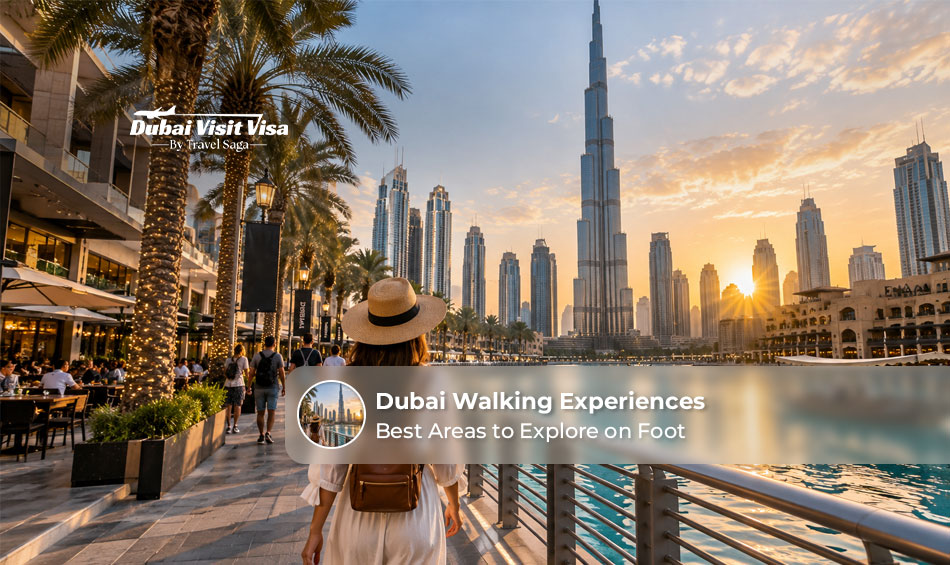
Dubai may be known for wide roads, taxis and impressive highways, but there is another side of the city that is best discovered at walking pace. From the 7 km Dubai Marina Walk and lively JBR to the narrow lanes of Al Fahidi, there are several districts where walking is genuinely enjoyable. The trick is choosing the right area for the experience you want. This guide covers Dubai’s best walking districts, from waterfront promenades and modern shopping streets to heritage neighbourhoods, beaches and green spaces.
Is Dubai Actually a Walkable City?
Dubai is not uniformly walkable in the way some compact European cities are. Its neighbourhoods are spread out, roads can be busy and summer temperatures can make long outdoor walks uncomfortable. But several individual districts have been designed with pedestrians in mind, making them excellent places to explore on foot.
Why the Car-First Reputation Is Only Half the Story
The idea that you cannot walk around Dubai usually comes from trying to walk between the wrong places. Walking from one major district to another can be impractical, but once you reach areas such as Dubai Marina, JBR, Downtown Dubai or Al Fahidi, the experience changes. These districts have promenades, pedestrian crossings, shaded areas, cafés and attractions close together. You can walk for an hour, stop for coffee, take photographs and continue without needing a car every few minutes.
Dubai Marina is a particularly good example. Its pedestrian promenade follows the marina canal, while JBR adds restaurants, shops and beach access nearby. In Old Dubai, walking becomes less about distance and more about discovering small lanes, courtyards, souks and traditional architecture.
The Dubai 2040 Urban Master Plan’s “20-Minute City” Vision: What’s Changing
Dubai is also planning for a more pedestrian-friendly future. The Dubai 2040 Urban Master Plan includes a “20-Minute City” goal, designed around making a large share of residents’ daily needs accessible within 20 minutes through walking, cycling or other soft-mobility options.
The Dubai Walk Master Plan, announced in 2024, takes this further by proposing a connected network of walkways, shaded sections, green spaces and pedestrian-friendly infrastructure. The plan is intended to make walking more comfortable throughout the year rather than only in selected tourist districts. For visitors, that means Dubai’s walkability is not simply about the attractions already available today. The city is actively developing more pedestrian connections.
Waterfront Promenades: The Best Walks with a View
If you want your Dubai walk to come with water views, restaurants and plenty of places to stop, the waterfront districts are the natural starting point.
Dubai Marina Walk: 7 km Palm-Lined Promenade Along the Marina
Dubai Marina Walk is one of the city’s most recognisable walking routes. The promenade runs for around 7 km around the marina, with skyscrapers, yachts, restaurants and cafés providing a constantly changing backdrop.
You do not have to complete the entire route. A shorter section around Marina Mall, Pier 7 or the busiest waterfront areas can easily fill an evening. The atmosphere becomes particularly lively around sunset, when the buildings begin to light up and restaurants start filling their outdoor seating. If you want a longer walk, follow the promenade and take breaks along the way. The area also connects conveniently with public transport, including the Dubai Metro and Tram.
The Walk at JBR — 1.7 km Beachfront Strip with Shops, Cafés, and Sea Views
The Walk at JBR is shorter but more commercial and energetic. The promenade stretches for approximately 1.7 km and is lined with cafés, restaurants, shops and entertainment options.
It is a good choice if you prefer walking where there is always something happening around you. You can combine a stroll with time at JBR Beach, a meal overlooking the sea or a visit to The Beach. JBR also works particularly well in the evening. The combination of illuminated buildings, outdoor dining and views towards the coast gives the area a distinctly different atmosphere from Old Dubai.
Dubai Canal Walk: A Modern Promenade Along Business Bay and Safa Park
The Dubai Water Canal offers another style of waterfront walk. The canal project created a long pedestrian and cycling network connecting the Business Bay area towards Jumeirah, with bridges, waterfront paths and views of Dubai’s modern skyline. RTA’s project information records a 6 km boardwalk and a 3 km jogging route, while other current guides commonly describe the wider pedestrian promenade as around 6.4 km. This is a particularly good route if you want photographs of modern Dubai rather than beach scenery. You can also cross-link this section to your
Urban and Retail Walking Districts
Dubai’s modern districts can be surprisingly enjoyable on foot when the attractions are close together. Downtown and City Walk are two of the easiest places to combine sightseeing with shopping and dining.
City Walk: Pedestrianised Streets, Murals, and Open-Air Shopping
City Walk has a more relaxed urban feel than a traditional shopping mall. Wide pedestrian areas, restaurants, public art, murals and contemporary architecture make it suitable for an easy afternoon or evening stroll. The advantage here is convenience. You can walk between cafés, shops and entertainment without repeatedly crossing major roads or getting into a taxi. It is particularly useful for travellers who want a modern Dubai experience without spending the whole day inside an enclosed mall.
Mohammed Bin Rashid Boulevard: A 3.5 km Loop Around Downtown’s Icons
Mohammed Bin Rashid Boulevard curves around Downtown Dubai and provides one of the city’s most recognisable urban walking environments. The boulevard is approximately 3.5 km long and offers views towards landmarks including Burj Khalifa.
The route is lined with restaurants, hotels, residences and landscaped areas. You can combine it with Dubai Mall, Burj Khalifa and the surrounding Downtown attractions. Rather than treating the boulevard as a destination on its own, think of it as a walking connection between several major attractions.
The Air-Conditioned Metro Link Bridge: An Easy Indoor Connector to Dubai Mall
Dubai’s heat can make even a short outdoor connection uncomfortable during summer. This is where enclosed and air-conditioned pedestrian connections become useful. The Metro link to Dubai Mall allows visitors to make part of the journey indoors rather than walking directly beside busy roads. It is a good reminder that exploring Dubai on foot does not always mean spending every minute outdoors. When planning your route, look for connected malls, Metro walkways and shaded pedestrian areas. They can make a major difference during warmer months.
Heritage and Old Dubai: Walking Through History
If you want to understand what Dubai looked like before the skyscrapers, Old Dubai is one of the best areas to explore slowly.
Al Fahidi Historic District: Narrow Lanes, Wind Towers, and Courtyard Museums
Al Fahidi Historical Neighbourhood is almost the opposite of Downtown. Instead of glass towers and enormous roads, you get winding lanes, traditional wind towers, courtyard buildings, galleries, cafés and museums. Visit Dubai describes the neighbourhood as particularly suited to exploring on foot, with its winding alleyways and traditional architecture. Give yourself time here. The best part is often turning down a small lane without a strict destination.
Al Seef: A Creekside Promenade Blending Old and New Architecture
Al Seef sits along Dubai Creek and combines traditional-looking architecture with modern restaurants, shops and waterfront spaces. It is easy to pair with Al Fahidi because the two areas offer contrasting experiences within the same Old Dubai itinerary. Walk along the creek, stop for refreshments and watch traditional boats move across the water. The atmosphere is especially pleasant later in the day when temperatures begin to fall.
Crossing by Abra from Bur Dubai to Deira’s Gold and Spice Souks
One of the simplest ways to turn a walking itinerary into a broader Old Dubai experience is to use an abra across Dubai Creek. You can explore the Bur Dubai side, cross the creek and continue walking around Deira’s traditional markets. The Gold Souk and Spice Souk provide a completely different atmosphere from Dubai’s modern shopping malls. The short boat journey also gives you a different perspective of the historic waterfront before you continue exploring on foot.
Beaches and Green Spaces for a Slower Walk
Not every Dubai walk needs to be about skyscrapers or sightseeing. Beaches and parks offer a slower way to spend a few hours.
Kite Beach: A 14 km Running and Walking Track Along the Coast
Kite Beach is popular with visitors who want a combination of sea views, food and outdoor activity. Emirates’ current destination information notes a 14 km running track at the beach, alongside restaurants and other activities. You do not need to walk the full track. Even a short coastal stroll followed by time near the beach can make a pleasant morning.
La Mer: A Colourful Seaside Promenade with Cafés and a Family-Friendly Pace
La Mer has traditionally been known for its colourful seaside atmosphere, restaurants and relaxed pedestrian spaces. It works well for travellers who want an easy walk rather than a serious walking route. The area is best approached as a leisure stop: walk, eat, take photographs and continue to another attraction when you are ready.
Safa Park: Lakeside Paths Next to the Dubai Canal
Safa Park offers greenery and open space close to the Dubai Canal. It can be a useful contrast after spending time around Business Bay’s towers. If your itinerary already includes the canal, adding the park can turn a modern city walk into a more relaxed outdoor afternoon.
Plan Your Dubai Walking Trip
Dubai is much easier to appreciate when you stop trying to see the entire city from a car window. Pick one district, give yourself time to wander and use public transport when you need to move further. Planning a walking-focused Dubai trip? Check your visa requirements before you book your flights. Visit Applydubaivisitvisa.com and get assistance with visa and travel planning.
FAQs – Dubai Walking Experiences
Dubai has several highly walkable districts, but the entire city is not uniformly pedestrian-friendly. Marina, JBR, Downtown and Old Dubai are among the easier areas to explore on foot.
Dubai Marina Walk is commonly described as a roughly 7 km pedestrian promenade around the marina canal. You can walk only part of it if you prefer.
Popular tourist districts are active in the evening, and many promenades remain busy after dark. Use normal travel precautions, stay on designated pedestrian routes and take extra care around roads and crossings.
The cooler months are generally more comfortable for outdoor walking. During summer, early mornings and evenings are better choices than the hottest part of the afternoon.
Yes. Marina and JBR are neighbouring waterfront districts with pedestrian routes connecting parts of the two areas. The Dubai Tram can also help if you do not want to complete the connection on foot. For more visa related questions, go through our FAQs section.
Visit our office- Get Directions